A bubbling pumpkin bowl, a paper ghost that moves without a touch, and a mysterious mixture that feels different when you squeeze it: a few everyday supplies can turn your table into a place for Halloween discoveries.
These Halloween experiments for kids give you something to explore together. Your child can choose colors, make predictions, and notice what changes while you help with measurements and preparation.
Pick whichever activity catches their interest. There is plenty to discover in just one bowl, or with one very small ghost.
Before You Start
Clear a stable table, protect it with a washable covering, and keep a cloth nearby. Read the activity first so you can gather everything before inviting your child to join you.
Stay alongside your child throughout. Hands-on steps are for children who can follow simple directions and keep materials away from their mouths and eyes. If your child still explores things by tasting them, let them choose colors and watch while you handle the materials.
Check ingredient and product labels, including age guidance for art supplies, and choose a different activity if an ingredient is unsuitable for anyone taking part. Keep snacks separate from the experiments, use only the listed ingredients, and wash hands afterward.
The times below are estimates for the activity itself; allow extra time for setting up and cleaning up.
1. The Bubbling Pumpkin Cauldron
What happens when two familiar kitchen ingredients meet? This little cauldron gives your child something to watch and listen to.
What You Need
- A stable, open plastic container holding about 1 cup
- A tray with raised edges
- 2 teaspoons baking soda
- ¼ cup ordinary food-grade white vinegar, about 5% acidity
- Measuring spoons and a small pouring cup
- Optional: a drop of food coloring
- Optional: one drop of ordinary liquid dish soap
- Properly fitting splash goggles for child and adult
An orange container can become your pumpkin cauldron. There is no need to carve a real pumpkin.
Your child’s part
Choose a potion color, spoon in the pre-measured baking soda, and predict what will happen.
The grown-up’s part
Measure the ingredients, prepare the colored vinegar, and handle the pouring. Set the container securely inside the tray.
Try It Together
- Get readyPut on your goggles. Let your child add the baking soda to the container.
- Add the optional soapAdd the optional drop of dish soap if you want to see more foam.
- Let the grown-up pourA grown-up slowly pours in the vinegar, keeping everyone’s faces back from the container.
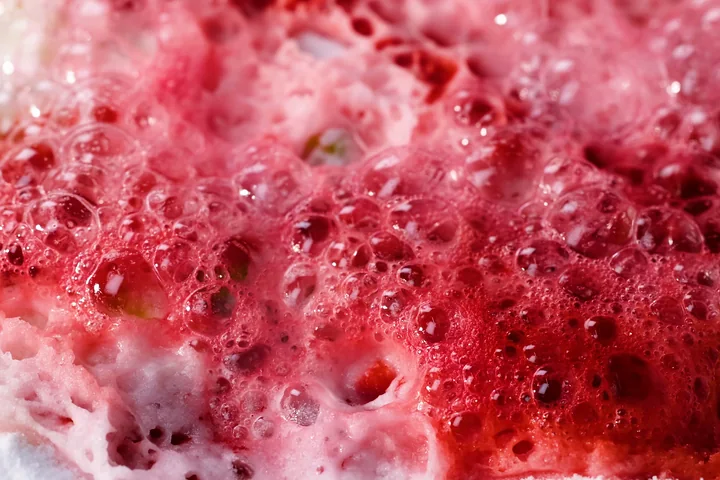
- Watch and listenWatch the bubbles appear. Can you hear the fizzing too?
Cleanup
Once the fizzing stops, a grown-up can rinse the small mixture down the sink with running water, then wash the container, spoons, and tray. Wipe up spills promptly.
The science and a question to try Optional
What Is Happening?
Baking soda and vinegar react to make carbon dioxide gas. The gas forms the bubbles you see. Dish soap catches some of those bubbles, making foam. The American Chemical Society explains the reaction in its baking soda and vinegar activity.
Something to ask
“What changed first: the sound, the bubbles, or the foam?”
For another try, use fresh ingredients in a clean container and compare the same amounts with and without the optional soap.
Before a repeat, ask, “What do you think will happen when we add the vinegar?”
2. The Dancing Paper Ghost
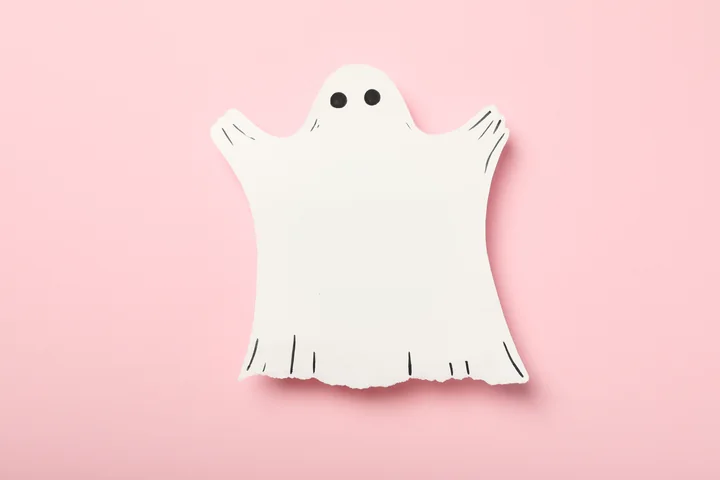
Can your child make a ghost move without blowing on it or touching it? A plastic ruler and a little static electricity may do the trick.
What You Need
- Very thin white tissue paper
- A plastic ruler
- A dry fleece or wool cloth
- A pencil
- Scissors for the grown-up
- A small piece of tape
Your child’s part
Choose the ghost’s expression, help rub the ruler, and investigate how close it needs to be.
The grown-up’s part
Cut out a small, simple ghost from a single thin layer of tissue paper, about 1–2 inches tall. Gather the scraps and handle the scissors and tape.
Try It Together
- Make your ghostDraw two light pencil eyes on the ghost. Lay it flat on a dry table and tape just its bottom edge down, leaving the rest free to lift.
- Try the ruler firstBring the ruler close before rubbing it. Does anything happen?
- Rub the rulerRub the ruler back and forth against the cloth for about 10–15 seconds.
- Look for movementSlowly bring it close above the ghost’s head without touching the paper. Watch for the tissue to lift or flutter toward the ruler.
Ghost staying still? Try thinner tissue, a smaller shape, or a different cloth and plastic ruler. Static experiments can be less effective in humid conditions.
Cleanup
Collect the ghost, tape, and paper scraps, then put away the ruler and cloth.
The science and a question to try Optional
What Is Happening?
Rubbing certain materials together transfers tiny electric charges between them. The charged ruler can attract lightweight tissue paper without touching it. This Halloween version builds on the household-material experiments in The Franklin Institute’s static electricity activity.
Something to ask
“How close can you get before your ghost starts moving?”
Try the ruler before and after rubbing it again. Your child can describe the difference, or draw what they noticed.
3. Monster Oobleck
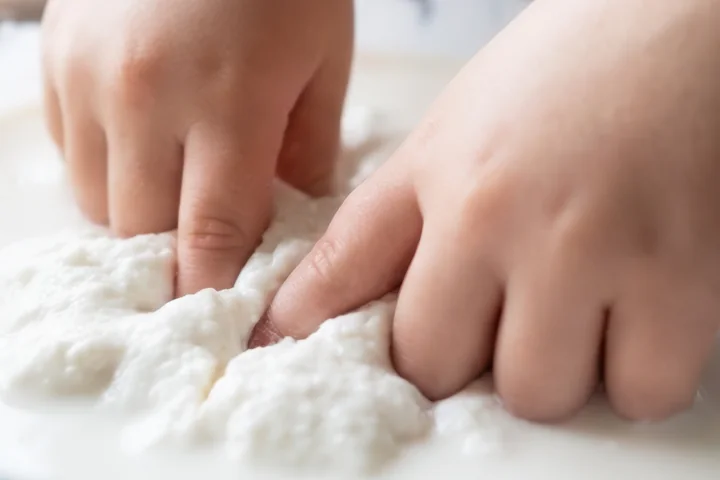
This strange mixture can resist a quick squeeze, then ooze through relaxed fingers. What will your child’s monster mixture do next?
What You Need
- 1 cup cornstarch
- About ½ cup room-temperature water
- A wide plastic bowl
- A spoon
- A tray with raised edges
- Optional: a drop or two of food coloring
Your child’s part
Choose a monster color, help stir once the powder is damp, and compare slow movements with quick ones.
The grown-up’s part
Measure and gently add the dry cornstarch, keeping it low in the bowl to avoid a cloud of powder. Help adjust the mixture.
There is no need to use fingers: a spoon works well for children who prefer to keep their hands clean.
Try It Together
- Prepare the ingredientsPut the cornstarch in the bowl. If using food coloring, mix it into the water first.
- Mix a little at a timeGradually add most of the water while stirring slowly. Add the remaining water a little at a time until the mixture flows slowly but resists a quick poke.
- Explore with a spoonTry moving the spoon through it slowly, then pressing more quickly.
- Try a squeeze, if you likeIf your child wants to touch it, squeeze a little in one hand, then relax their fingers over the bowl.
Adjust the mixture Too runny? Stir in a little more cornstarch. Too dry and crumbly? Add water a few drops at a time.
Cleanup
Discard the mixture after the activity. Scrape it into the trash and wipe remaining residue from the bowl and tray before washing them. Keep oobleck out of the drain because it can clog pipes.
The science and a question to try Optional
What Is Happening?
Oobleck is a non-Newtonian fluid. It resists a quick poke or squeeze but flows more easily when you move slowly. It can feel solid-like without becoming a different substance.
Something to ask
“What happens when you move slowly? What changes when you move quickly?”
Your child might call it swamp soup, pumpkin goo, or something wonderfully unexpected.
Let Curiosity Lead the Way
You do not need to turn every discovery into a lesson. “What do you notice?” and “What shall we try next?” leave plenty of room for your child’s own ideas.
They might want to repeat the bubbles, invent a story about the ghost, or spend longer exploring the oobleck with a spoon. Watching is a way to join in too.
For another activity to make together, try our pumpkin decorating ideas for kids. And for songs, crafts, and cartoons to enjoy during the season, explore our Halloween activities for preschoolers.
Next time you open KidsBeeTV, let your child help choose what catches their interest in the Halloween category.