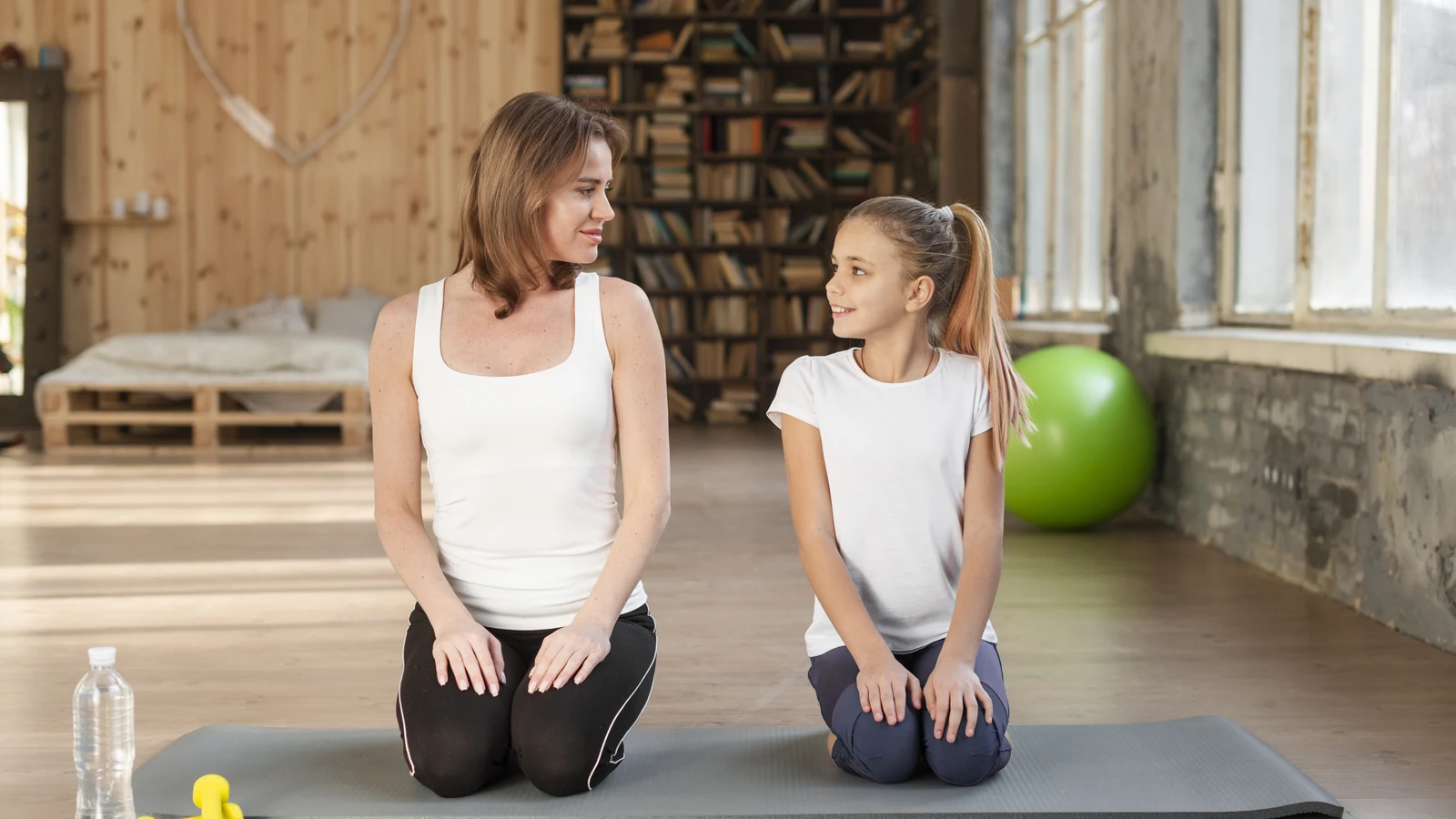
Yoga gives young children a way to explore movement, balance and moments of quiet. For ages 3–7, that might mean reaching like a tree, copying a gentle stretch or pausing to notice a breath together.
At this age, a playful approach makes room for different ways to join in. One child may enjoy a balance game; another may prefer gentle seated movements. The aim is a comfortable experience you can share.
What yoga can offer young children
The benefits below are best understood as opportunities to practice and explore. A child balancing for a moment or enjoying a quiet pause has had that experience; it does not tell us how their sleep, schoolwork or emotional health will change.
1. Practice with balance, strength and flexibility
Reaching, shifting weight and supporting the body in different positions give children ways to explore how they move. Begin a Tree game with both feet flat and a hand resting on a wall. If your child wants a small balance challenge, they can lift one heel while keeping the toes of that foot on the floor.
Choose a comfortable range of movement rather than a deeper stretch. Strength and flexibility develop through many kinds of physical play; yoga can be one part of a day that also includes other movement your child enjoys.
2. A familiar way to wind down
Some children enjoy a gentle stretch or a quiet seated pause as part of the transition toward bedtime. If that suits your child, keep it simple and familiar, without a screen or an exciting new challenge.
You might lower your arms slowly together, then sit for a moment before a story. This is a wind-down idea, not a promise of falling asleep faster or sleeping more soundly. If movement makes your child livelier, enjoy it earlier in the day.
3. Practicing attention for a moment
Following one movement, listening for a pause or looking at a steady spot while balancing gives a child something specific to attend to. Keep the cue concrete: “Reach up, then bring your hands down.”
In a small randomized study at one Tunisian kindergarten, 45 children around age five took part in yoga, physical education or usual activities for 12 weeks. The yoga group improved on a visual-attention score compared with the usual-activity group, and teachers reported less inattention and hyperactivity. The study did not establish better school performance or treatment for attention difficulties.
A short home game is a different experience from a taught program lasting several weeks. Repeat a familiar movement if your child enjoys it, and add another when they want more.
4. A pause in a busy day
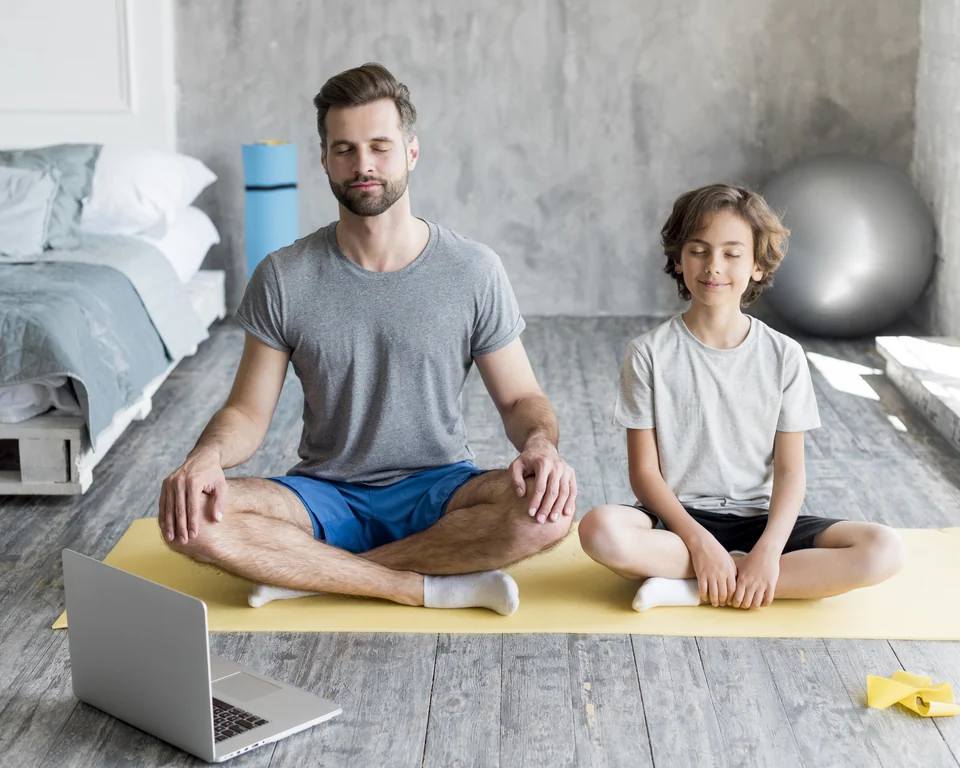
A change of pace can be welcome after lively play or a busy outing. Try sitting comfortably, gently opening and closing your hands, or noticing an ordinary breath together.
Let breathing stay easy, without asking for a very deep breath or a long hold. Your child can keep their eyes open and look around. A quiet activity may feel restful one day and less appealing on another; there is no need to make relaxation a task to complete.
5. Making choices and noticing progress
A child may enjoy finding a movement they can do, choosing a variation or leading the next turn. Give them something real to decide: arms wide or hands on hips, seated or standing, another turn or a different game.
Notice the attempt in concrete words: “You kept your toes down and found your balance.” This leaves room for satisfaction without comparing children or making a difficult pose the goal. An enjoyable attempt does not depend on holding still for a particular length of time.
6. Noticing body signals and feelings
Yoga can be a setting for talking about what your child notices: legs that feel tired, a heart beating after movement or hands that want a rest. A simple comment such as “My shoulders feel tight, so I’m lowering my arms” gives them an example to respond to.
If your child is upset, offer comfort and help with what happened; a breathing exercise need not be the first response. These are opportunities to notice and talk, not a guarantee of self-control or a treatment for anxiety.
A preschool study of a combined yoga and mindfulness program found larger gains in some teacher-rated social-emotional scores than in earlier school-year comparison groups. It was not randomized, so the changes cannot be attributed confidently to yoga alone.
7. Sharing a game
Take turns choosing a movement for the other person to copy. Your child might reach one arm out, make a small wave or invent a tree with very low branches. You can copy their version and let it change the game.
This creates room for imitation, conversation and taking turns. Children do not need to move in the same way or at the same pace to enjoy participating together.
Why a playful approach suits ages 3–7
Songs, stories and familiar images give a movement a meaning children can join in with. “Grow some branches” is a more concrete invitation than a long explanation of how a pose should look. A pretend tree can be short, wide, seated or swaying gently.
The National Association for the Education of Young Children describes play as an important context for development and learning. Here, that means leaving room for children’s ideas while an adult offers a manageable starting point.
Ages 3–7 cover a wide range of experience and ability. A beginner might enjoy copying one action. A child who knows the game may want to link several movements or make up a story around them. Choose the next step from what your child is doing, rather than expecting everyone of the same age to follow one routine.
Start with one or two movements. There is no need to fill a 10- or 20-minute session. You can repeat a favorite, change the story or finish after a short turn.
Helping your child take part comfortably
Use a clear space with enough room to reach without hitting furniture or another person, and a surface that will not slide underfoot. Demonstrate the movement and let your child choose how far to go. Do not push, pull or place their body into a pose, and stop a movement that hurts.
For balance games, use a stable wall or support within easy reach. If you use a chair, choose one that will not roll or tip and a sitting position with suitable support for your child. A seated version changes the movement; it is not automatically comfortable or appropriate for everyone.
If an injury, health condition or movement need affects these choices, adapt them with advice from a clinician or therapist who knows your child. If you choose a class, ask about the instructor’s experience with children and adapting movements. The National Center for Complementary and Integrative Health advises beginners to avoid extreme poses and forceful breathing. The simple sequence below leaves out headstands, shoulder stands, forced stretches and breath-holding.
A short playful sequence to try together
Try any of these movements in a comfortable order, or choose just one. They are ideas for shared play, with no required holding time or number of repetitions.
Grow a tree
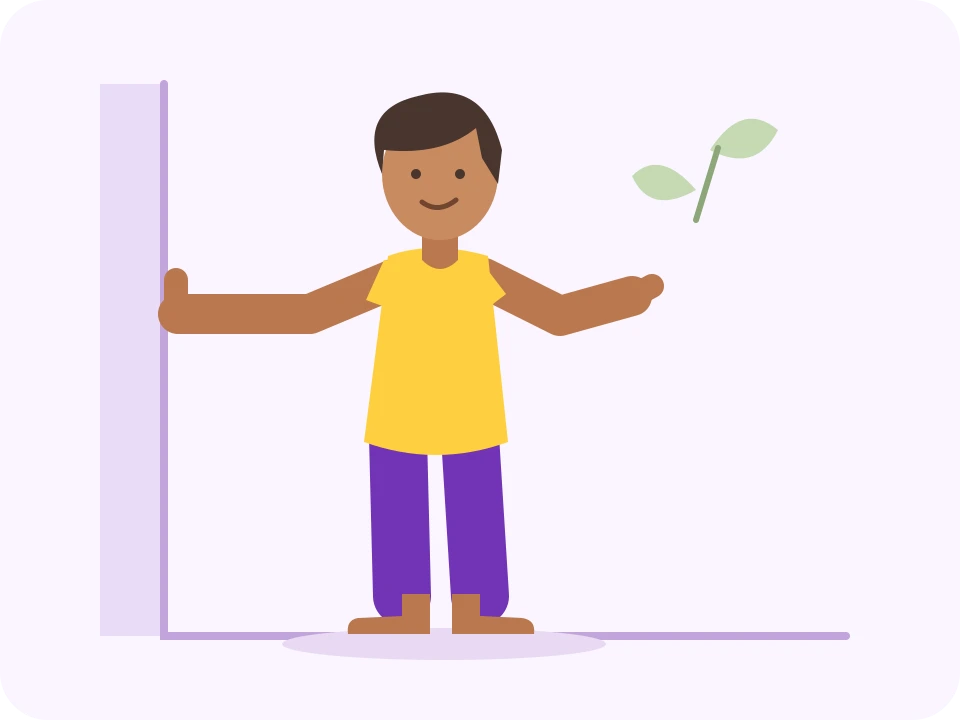
Stand with both feet flat on the floor. Reach your arms out as branches, keeping them at a height that feels easy.
Easier choice: Keep both feet flat and rest a hand on a wall. For a small balance challenge, lift one heel while keeping those toes on the floor.
Seated choice: Keep your usual supported sitting position and grow one or both arms into branches, only as far as feels comfortable.
Back to the movementsMake gentle wings
With both feet down, open your arms a little to the sides, then bring them back. Let your child decide how small or wide their wings will be.
Easier or seated choice: Move one arm, open and close your hands, or keep your arms low while seated with suitable support.
Back to the movementsBe a small cat
If being on hands and knees is comfortable, gently round your back a little, then return to a comfortable starting position. Keep the movement small, without dropping your head or arching deeply.
Easier or seated choice: Stay in a supported sitting position and gently move your shoulders forward, then let them return. This is a different way to join the cat game, without putting weight through the hands and knees.
Back to the movementsLet the branches rest
Lower your arms and choose a comfortable position. Notice one easy breath without changing it. Your child can tell you which movement they liked or choose one to repeat.
Easier or seated choice: Rest in your usual supported position and look at something in the room. There is no need to close your eyes or focus on breathing.
Back to the movementsExploring Classy’s yoga videos on KidsBeeTV
Families who already use KidsBeeTV can find Classy’s Discovering Yoga playlist, which includes “Let’s do Yoga!” and “Yoga with friends.” Choose a small part to share, and keep any movement within your child’s comfortable range. You can then put the screen aside and take turns choosing a movement for each other to copy.
The offscreen game is your own addition to the video. For preschoolers, the American Academy of Pediatrics’ media guidance suggests doing something related to what you have watched and keeping room for everyday play and movement.
You can also begin without a screen: choose a movement your child already likes and copy each other. Return to the parts you both enjoy, whether that is a quiet pause, a wobbly tree or a new movement your child invents.