
For many families, Thanksgiving is a time to get together, share a meal and give thanks. In the United States, the holiday falls on the fourth Thursday in November. A few minutes of play can give your preschooler a way to join in.
Try a guessing game before guests arrive, make a thank-you card for someone you’ll see, or choose a small way to help during a family visit. These four Thanksgiving activities use familiar materials and work with one adult and one child. Siblings or guests can take a turn too.
Go first with an example of your own, then give your child a moment. They can answer with a word, a gesture or their usual way of communicating. They can pass, too. Use whatever language feels natural at home.
Four ways to play and give thanks
1. Play Gratitude I Spy
About 3 to 5 minutes. No supplies.
Pick something you can both see and give a clue. “I spy something soft that I wear on my feet.” Let your child guess or point. When they find the slippers, tell them why you’re glad to have them. “They keep my feet warm in the morning.” Then let your child pick something they like and give you a clue.
If picking from a whole room feels tricky, offer two things your child can look at or feel from where they are. They can show you which one they like.
Back to the activities2. Draw a thank-you card
About 5 to 10 minutes. One sheet of paper and crayons made for children.
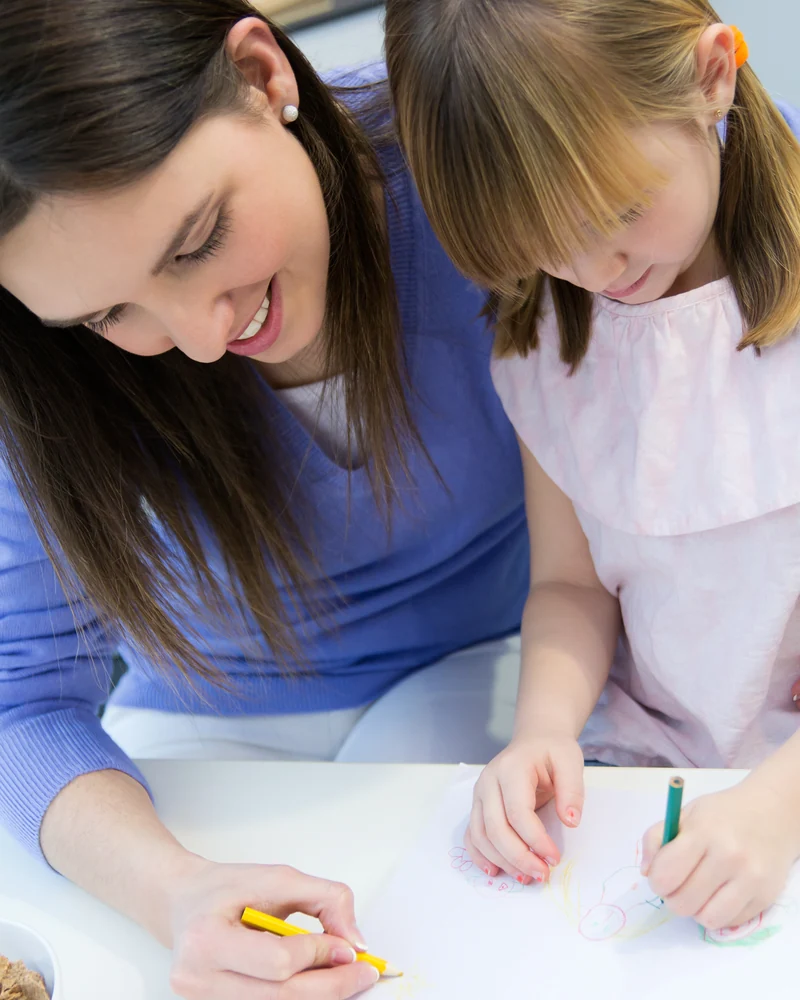
Ask your child who they’d like to thank and what that person did. You might say, “I’d like to thank our neighbor for inviting us to Thanksgiving dinner.” Fold the paper in half for them. Let your child draw the person, the moment or anything they want the person to see.
Offer to write a message inside the card with your child. If they’d rather pick the colors and have you draw, you can be the illustrator. Decide together whether to give the card to the person or keep it for now.
Back to the activities3. Guess the helpful move
About 3 to 5 minutes. No supplies.
Pretend to open an umbrella and hold it over both of you. Let your child guess what you’re doing, then say how it helps. “This keeps us both dry while we wait for the bus.” Swap roles and let your child choose an action for you to guess. If they want an idea, suggest holding a door open or reading to someone. Once you guess, you can say what you’d thank them for. “Thanks for holding the door while I carried the books.”
Play in place, sitting or standing. If your child is stuck on a guess, give them two choices or make the motion together.
Back to the activities4. Do a small favor together
About 3 to 5 minutes. Use what’s already nearby, such as books or crayons and their box.
Offer two little ways to help. You could put a few books away for the next person who wants a story or gather the crayons after drawing. Let your child choose the favor and how to share the job. For the crayons, they could hold the box while you put the crayons away, or you could swap.
When you finish, name the part that helped. “Thanks for holding the box open. I could put the crayons away with both hands.” If your child would rather watch, they can choose the favor and let you do it.
Back to the activitiesTalking about U.S. Thanksgiving with your child
The familiar Thanksgiving story often starts with a harvest meal shared by Wampanoag people and English settlers in 1621. The Wampanoag already lived in the area around Plymouth, with their own communities and long traditions of giving thanks. The Smithsonian’s National Museum of the American Indian explains this wider history.
You might begin with: “Wampanoag people lived around Plymouth long before the English families arrived. They had their own homes and ways of growing food and giving thanks. Wampanoag families still live in Massachusetts today.” You can learn about one present-day community through the Wampanoag Tribe of Gay Head (Aquinnah).
The history also includes violence by colonists and the loss of Wampanoag land. For some Native people, Thanksgiving is a day of mourning. In Plymouth, Massachusetts, the National Day of Mourning brings Indigenous people and their allies together to remember ancestors and protest injustices Native people still face.
If your child asks why some families do not celebrate, you could say: “Some families use this day to remember family members who lived long ago and land that was taken from their people. They want people to know what happened and to treat Native people fairly today.”
For a story to read together, try Keepunumuk: Weeâchumun’s Thanksgiving Story, co-written by Mashpee Wampanoag author Danielle Greendeer. It tells the Thanksgiving story from a Wampanoag perspective. Look at the pictures together and ask, “What do you notice about the food or the people?” The book also includes a glossary and additional resources for your own reading.